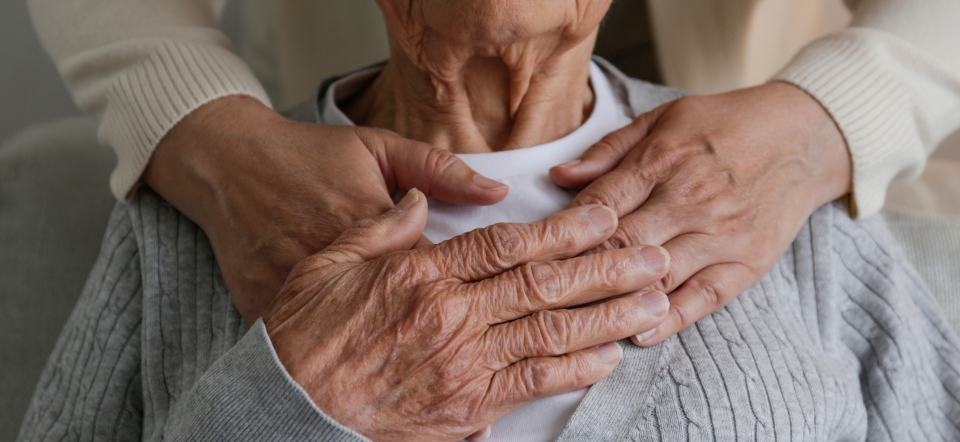
Migration is a complex process which involves many sometimes hard and emotional decisions and dilemmas that need consideration. For example, who takes care of the elderly when we leave?
That is the title question of the research project Who Takes Care of the Elderly When We Leave? Negotiating Care in Transnational Families in the Nordic-Baltic Region and Beyond (TransCareNet). The project is looking at transnational care of elderly relatives from both the perspective of migrants from the Nordics and Baltics, and Ukraine residing in Iceland, Lithuania, and Sweden and the perspective of stakeholders such as welfare providers, NGOs and migrant organisations.
The project leader Maarja Saar, Associate Professor at Mid Sweden University points out visibility for this issue as a main aspect that the project wants to address. The aim of the project is to inform policy with their insights on the needs of migrants providing transnational care.
“Awareness is the first step. Most of the research on transnational care focuses on care of children, not on the elderly left behind in the country of origin. But it is a quite a common practice, many migrants do travel back and forth to manage care of elderly relatives as there are moral obligations tied to it. Even Ukrainian refugees travel home to take care of elderly relatives despite the war,” she says.
Lack of responsibility among stakeholder organisations
Migrants who have elderly relatives in need of care in other countries often have to manage complicated emotional work and are therefore in need of support. For someone who has been away for many years it is not easy to, for example, navigate the elderly care system in the country of origin where they have ageing parents in need of care.
But interviews with the stakeholder organisations show that one of the biggest challenges hindering the support for this group is lack of responsibility and legislation.
“It's a little bit of a no man's land, meaning nobody thinks that they're responsible for it because it goes beyond state boundaries,” says Saar.
Ability to give transnational care depends on the job and family situation
Not being able to care for ageing parents leaves many feeling guilty and the ability to give transnational care is often dependent on the labour market position of the migrant, according to the project.
“When a problem or emergency occurs, you need to mobilise yourself quite quickly. That means you need a very flexible job or a very flexible employer in order to even be able to travel to the country of origin and provide care. So, formalizing paid leaves and flexibility when emergencies occur are important things this group needs,” Maarja Saar says.
Another aspect is the family situation of the migrants. Those who have young children struggle more with providing transnational care for the elderly, according to her.
“For them it is even more complicated. They can't leave the children just like that, especially if they're single parents, which, for instance, many Ukrainians in the Nordics are, because the men are still in Ukraine,” she says.
Moving back or bringing the elderly along?
As transnational caregiving is challenging, one of the dilemmas facing migrants with ageing parents in need of care is whether to move back to the country of origin or to bring the parents to the host country.
“We have cases where people have tried to take their parents to Sweden for example, so that they can get care there. But even though the Nordics have strong welfare states, the legislation on bringing your parents is very complicated and usually the parents do not even wish to move. If you bring them just for a while, it is not easy for them to access medical care. And those elderly who have taken the step and moved are usually quite lonely and in need of social support. So, I'd say that it mostly ends with migrants travelling back and forth to the parents to provide them with care,” explains Saar.
Of the three countries part of the project, Lithuania sticks out as interesting case, because they have people moving back to take care of their elderly relatives.
“For Lithuanian migrants the moral dimension might be bigger than for Nordic citizens because it's a society that still very much expects children to take care of their elderly parents. So, there is an existing return migration to Lithuania because of this,” says Saar.