For refugees arriving in the Nordics and Baltics access to healthcare is not always straightforward. Barriers such as lack of information, communication challenges, difficulties navigating the system, and limited trust often stand in the way.
The project Promoting Access to Health Services through Participatory Approach: E-Health Intervention to Promote Good Health Seeking (PATHS) seeks to reduce these gaps and improve access to healthcare for refugees and other migrants groups.
The project aims to map and understand both Ukrainian refugee women’s experiences with healthcare access in the Nordics and Baltics, and the perspectives of healthcare systems and providers. These insights will be used to design a user-centred digital health solution to support system navigation, communication, and access to reliable information.
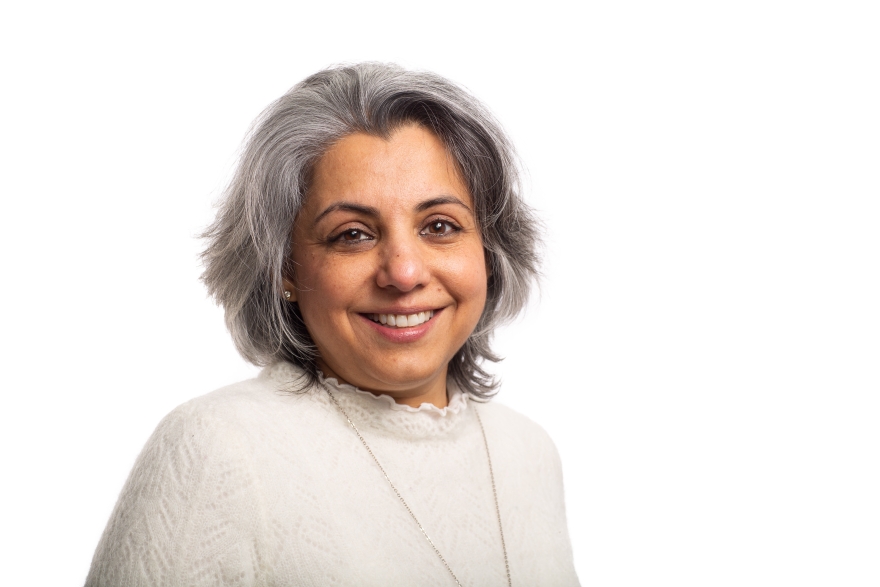
“Overall, we are very focused on improving the health equity and making healthcare systems more equitable,” says Ashis Jalote-Parmar, Associate Professor, Norwegian University of Science and Technology (NTNU) and project leader of PATHS.

Main barriers to healthcare access for migrants
The project has just finished data collection in two of the partner countries, Estonia and Norway, and data collection in Sweden is ongoing. The data already shows some common patterns across countries.
“What we see is layered and interconnected. Language and communication barriers can make people feel misunderstood and not fully heard. Lack of information about how to navigate the system can undermine trust. There is often a gap between what people are entitled to and what they can access in practice. For example, in Norway, a refugee woman may be entitled to see a specialist, but in practice, she first needs to register with the general practitioner (GP), understand the referral system, book an appointment, and clearly explain her condition. If she does not understand this gatekeeping system or the GP, then she may not reach to a specialist, even though she has the right to,” says Jalote-Parmar.
In Estonia the health care workers emphasize navigating the digital first health care system as the main barrier for refugees, according to Jalote-Parmar.
“They say it is difficult for many to understand how e-consultations, online booking, and digital records work. So, the healthcare workers have to support the refugee patients, especially older individuals, with navigating the digital system while challenged time constraints and language barriers. This shows that access to healthcare is strongly shaped by how the healthcare systems are organized, explained, and experienced in real interactions,” she says.
Systematic and transparent communication is key to solve issues
For the healthcare workers, the challenges are quite similar and consistent with what is occurring at the European level, Jalote-Parmar explains.
“Overall, there is a strong need for better interpretation and communication support. And more time for consultation, especially when interpretation is required. Stronger mental health resources and better coordination of continuity of care are other aspects where more investment is needed. In Norway the healthcare workers also highlighted the issue of repetitive retelling of medical histories. It can be very stressful for migrants having to repeatedly share sensitive health information first when registering in the municipality, then again with the GP, and finally with the specialist,” she says.
According to her, the healthcare systems are well in place in the Nordic and Baltic countries, but systematic and transparent communication is key to improving access for refugee. Especially information on the availability of preventative care such as mental health, cancer screenings, and vaccines is important.
“Preventative care seems to be particularly challenging to navigate, because that often requires people to know what services exist, understand if they are eligible, how to access it, and trust the system enough to use it. All this can be very difficult in a new country. And with sensitive issues such as mental health or reproductive health there are stigmas and concerns about confidentiality that delay in help-seeking,” says Jalote-Parmar.
Use-centre digital platform for migrants and healthcare workers
The PATHS project is based on a user-centred design (UCD), also called participatory design or collaborative design, which is the idea that solutions start with people, not technology.
“A lot of digital tools are built on what technology can do and users are expected to adopt it. We start with asking who the users are, what they are struggling with and what they need to navigate the health care system today. This analysis gives us a basis on which we design a system. In all critical stages of product design and development, we involve the end users. In the case of this project the design will result in a digital platform that can help refugees with step-by-step navigation of healthcare systems access,” says Ashis Jalote-Parmar.
The platform will include clear and reliable information in multiple languages for the refugees regarding the host countries, but also information about how the healthcare system works in Ukraine for healthcare workers, so they get context and can understand the migrants better, according to Jalote-Parmar.
“The goal is to create something which is actually usable in real-life situations and not just functional. We will begin by developing it for Ukrainian refugee women in Norway and test it there, but we aim to customize the platform for other countries and other population groups in similar situations as well,” she says.
The project has ambitions to generate meaningful societal impact.
“It is essential to improve refugees' understanding of healthcare systems, strengthen navigation, and supporting more equitable access to services so the people can use the care as they are entitled to. That is our number one goal. Second, we aim to inform health policy by providing evidence on where the gaps occur. Finally, we aim to create practical solutions that are implementable for future use. This includes clearer guidance interpretation and communication support, and more structured and accessible pathways for preventative care,” says Jalote-Parmar.
Read more about the PATHS project: PATHS - Department of Design - NTNU